Sleep Monitoring App for Objective Mental Health and Emotional State Assessment
| Type of Client | Region | Time Spent |
| Wellness tech firm | USA | 4 months |
Client Profile
The wellness tech company aims to move beyond basic data aggregation to establish an objective, personalized self-care platform. Their existing digital solutions effectively monitor activity and sleep but do not assess mental health and emotional state. Reliance solely on basic sensors is inaccurate, particularly given that modern sleep monitoring app development has raised user expectations. They turned to Paradigma ST for building a system that integrates both visual and sensor data to assess sleep quality and promote self-care overall.
Problem / Task
The client’s platform suffered from some major, restricting limitations. Significant data fusion challenges are caused by disparate, messy data sources (wearable sensors, microphone input, visual data from the phone camera). Determination of sleep stages – precisely REM, light, and deep sleep – is solely based on basic wrist-worn accelerometer data. There was no reliable or non-intrusive method to measure a person’s emotional state during the day with standard device cameras.
Solution
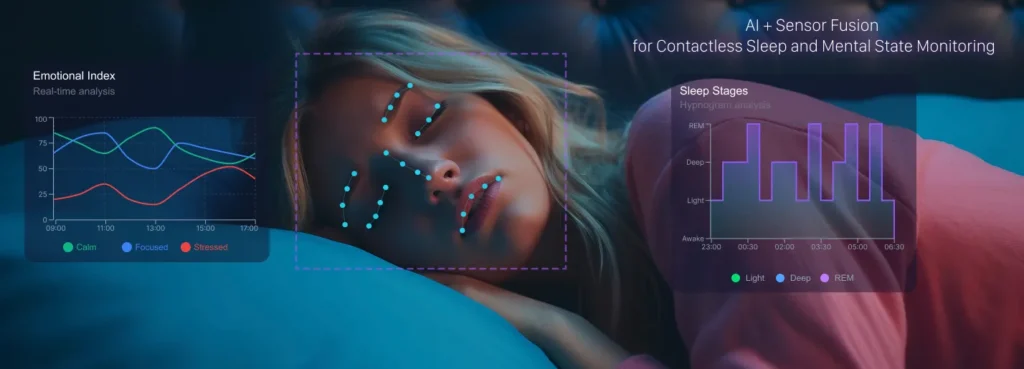
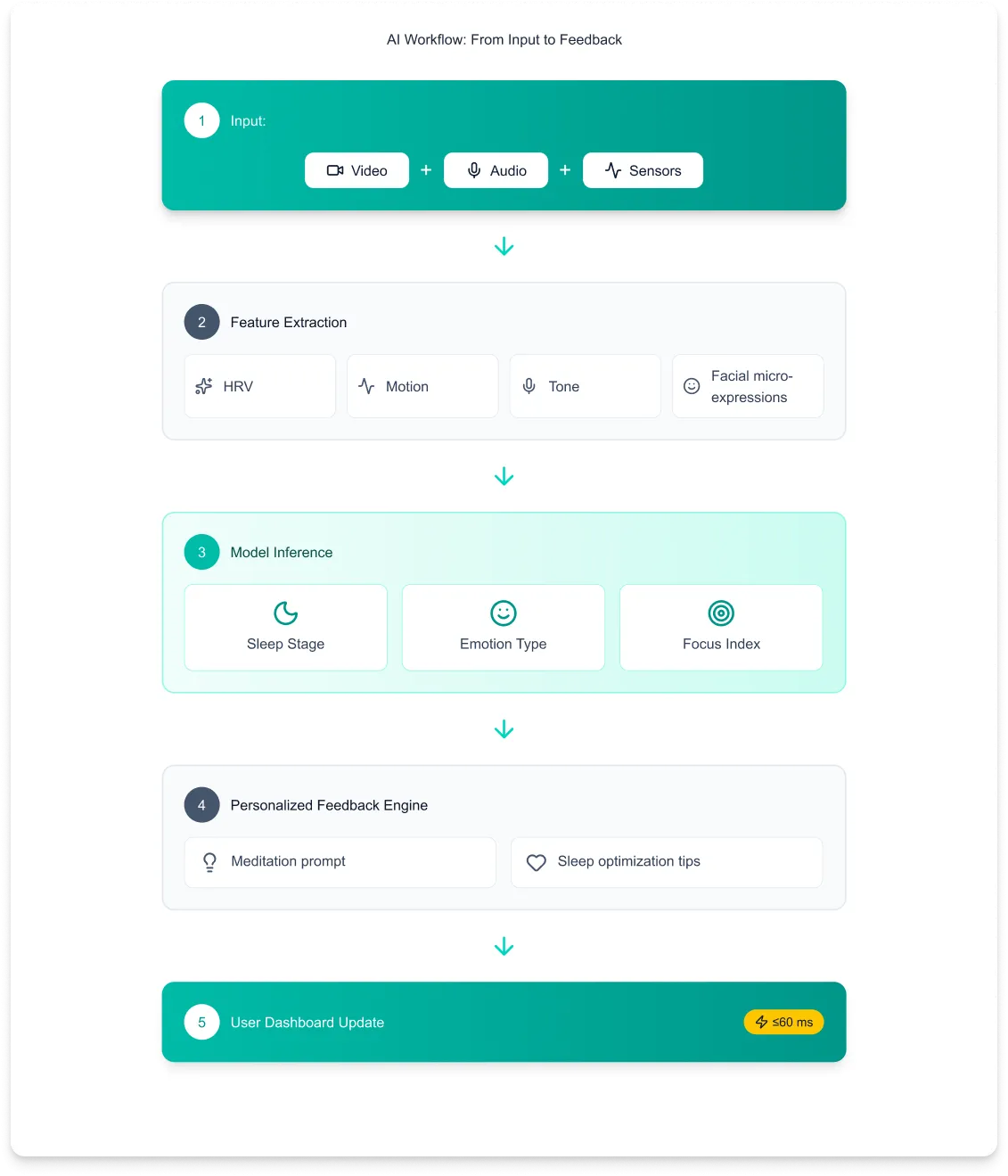
Our plan centered on combining computer vision (CV) and physiological signal processing that far exceeds the basic sleep tracker app development.
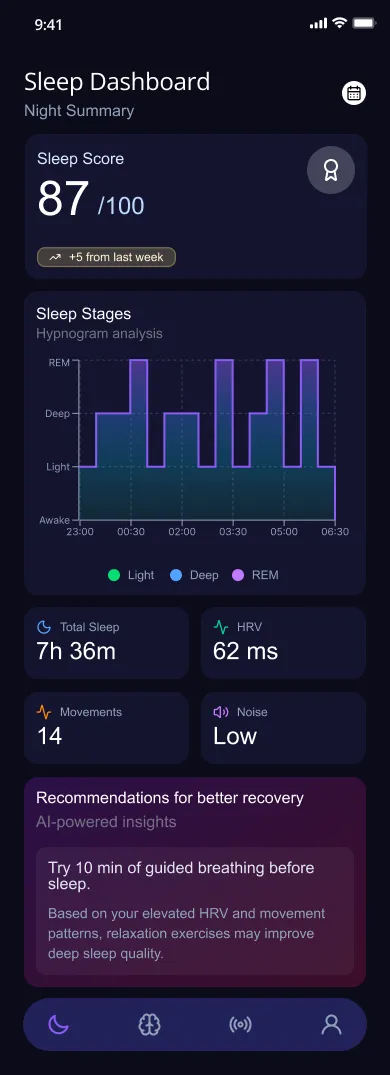
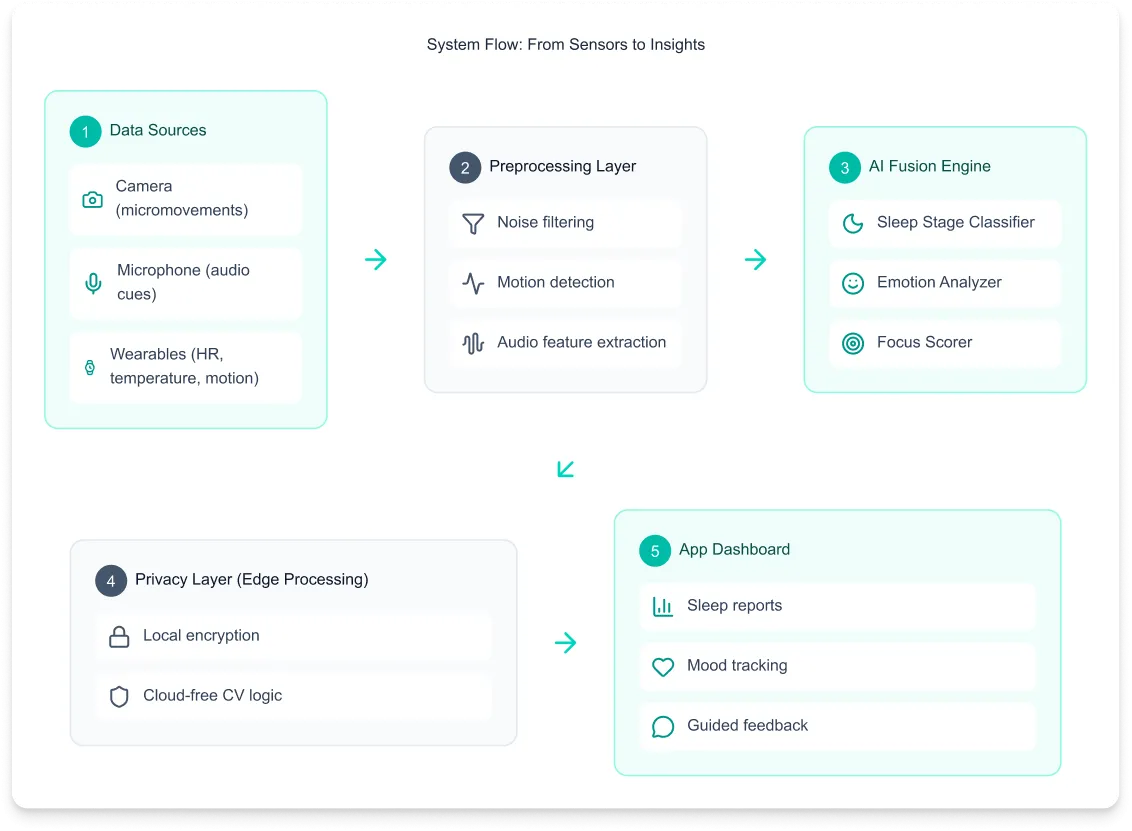
- Contactless Sleep Tracking Core: Deep learning model for contactless, camera-based sleep stage classification through micromovements and audio cues.
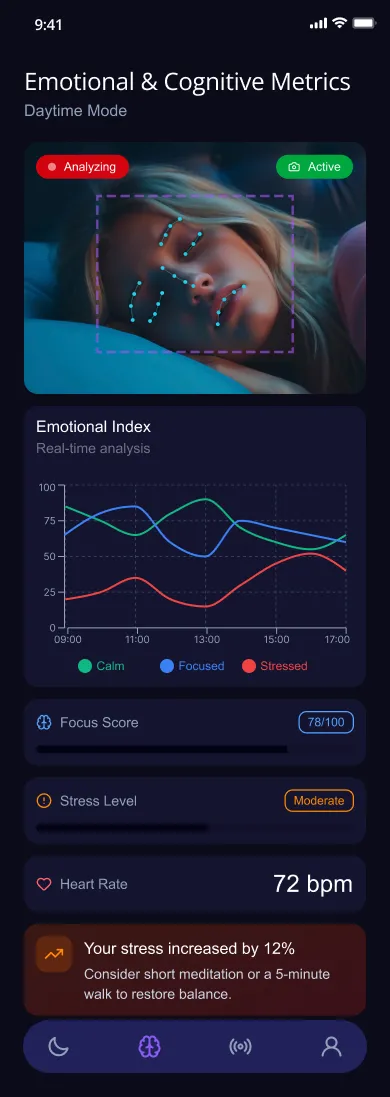
- Real-Time Facial Analysis CV: Subsystem for emotional state, heart rate, stress marker assessment.
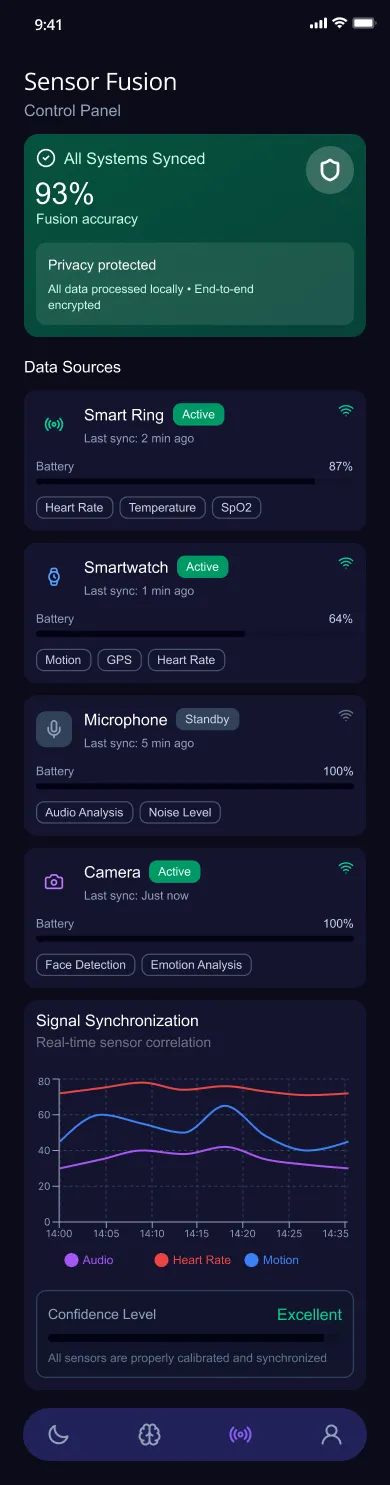
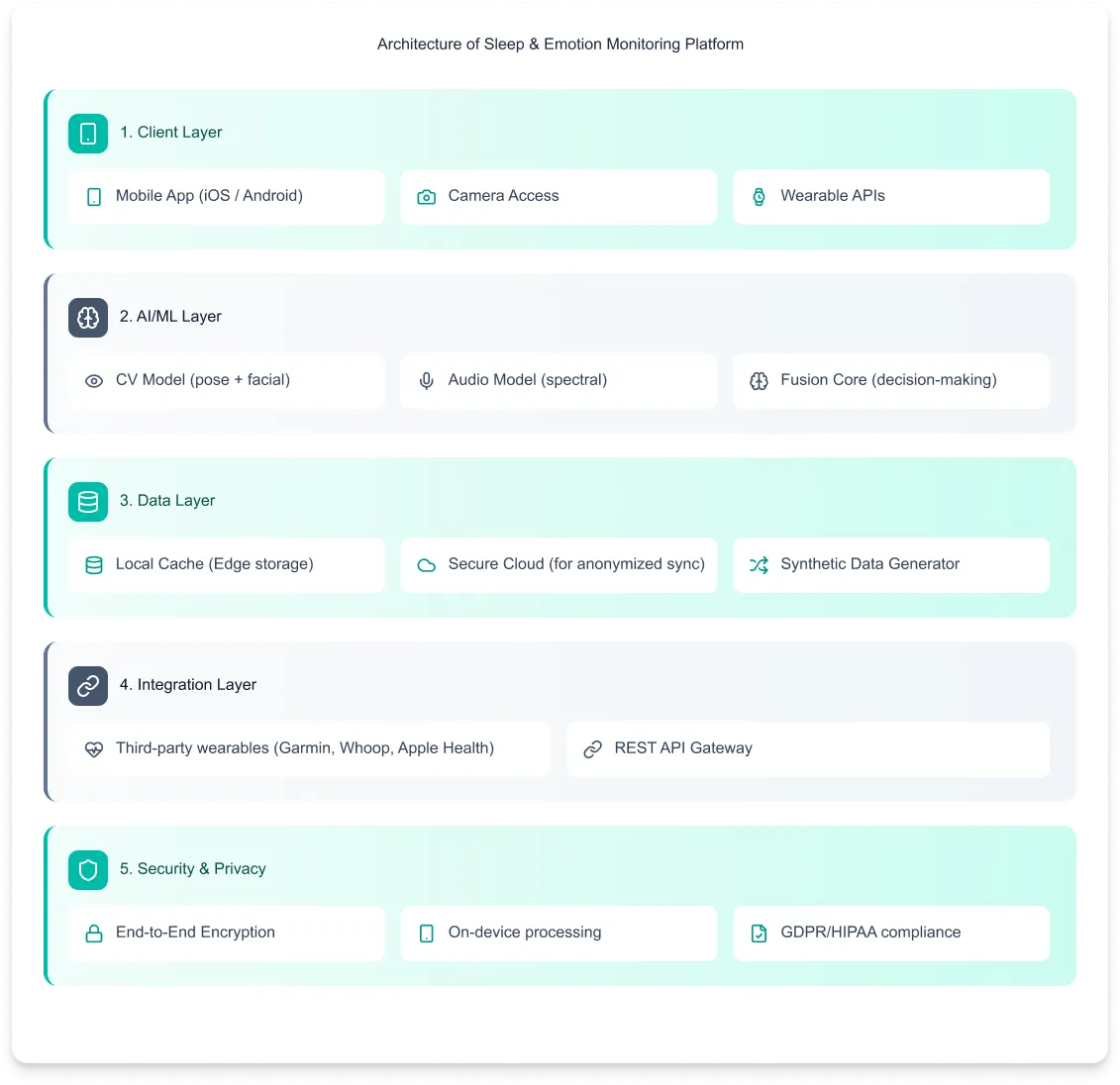
- Powerful Sensor Fusion Engine: System for combining and weighting data from intelligent rings, smartwatches, and internal device sensors.
- Adaptive Biofeedback: Modules for data-led personalized breathing and guided meditation suggestions.
- Edge-Device Processing: Architecture for sensitive visual and biometric data with maximum privacy and minimal cloud reliance.
Process
The troubleshooting plus the core prototype’s development took four months.
- To start with, we performed an audit of the client’s infrastructure and data pipeline.
- The next step was to gather and put together a large, varied dataset of sleep sessions along with synchronized physiological signals.
- We worked on the sleep stage classification model, which includes ballistocardiography (the visualization of micromovements) and specialized acoustic data.
- Then came the tough development of the CV model for emotional and focus assessment.
- The sensor fusion model was built, and we made a functional, client-facing application prototype.
Result
Real-time, low-latency integration with major third-party wearable devices was accomplished through a unified API gateway. Now the new “mental focus score” offers the users easy-to-understand metrics for their concentration levels.
|
35% Improvement in sleep stage classification accuracy |
20%
Average reduction in reported stress levels |
Challenges
During sleep tracking app development, we faced quite a few demanding technological challenges. For example, creating a non-contact system capable of accurately detecting very micromovements (e.g., heart rate variability) and achieving latency for real-time emotional state feedback with a very low sub-50ms target. Also, we checked that the mental health (especially facial expressions) visual analysis system is not affected by a person’s skin tone, glasses use, facial hair, etc.
Interesting Facts
- The errors in white noise classification forced the redesign of the audio filter subsystem.
- The final CV model requires less than 50MB of space, which makes the application lightweight.
- The team came up with a custom synthetic data generation pipeline to get enough samples for rare mental state observations, and they implemented it.
Feedback
The sleep cycle app development project became the digital self-care foundation by providing access to a sophisticated mental well-being assessment. The new platform converts passive visual and sensor data into actionable, personalized insights.