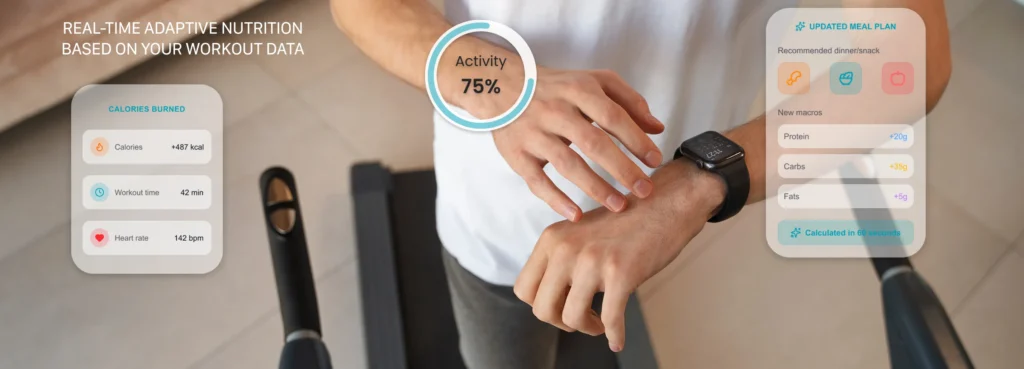
Diet and Nutrition App for Food Tracking and Personalized Fitness Guidance
| Type of Client | Region | Time Spent |
| Fitness technology startup | Europe | 5 months |
Client Profile
The fitness tech firm commits to increasing athlete productivity through the optimal combination of physical training and dietary input. They already have a strong base of diet and nutrition app development but want to move into the complete performance area. They are looking for expert help to create a data-driven system that would adapt to the individual for instant personalization of nutrition plans.
Problem / Task
The problem was that users were tracking their runs or lifts with one application but manually logging meals on another platform. This disconnect caused a delay – a critical performance-latency gap between a vigorous workout and the consequent increase in a user’s caloric and macro intake. The client’s MVP was a static diet planner app development that could not provide real-time feedback.
The main task was to engineer a scalable backend that would be able to ingest and process real-time data from third-party wearable APIs and modify the personalized daily meal plan instantly. The client needed an intelligent and automated link between nutrition and fitness.
Solution
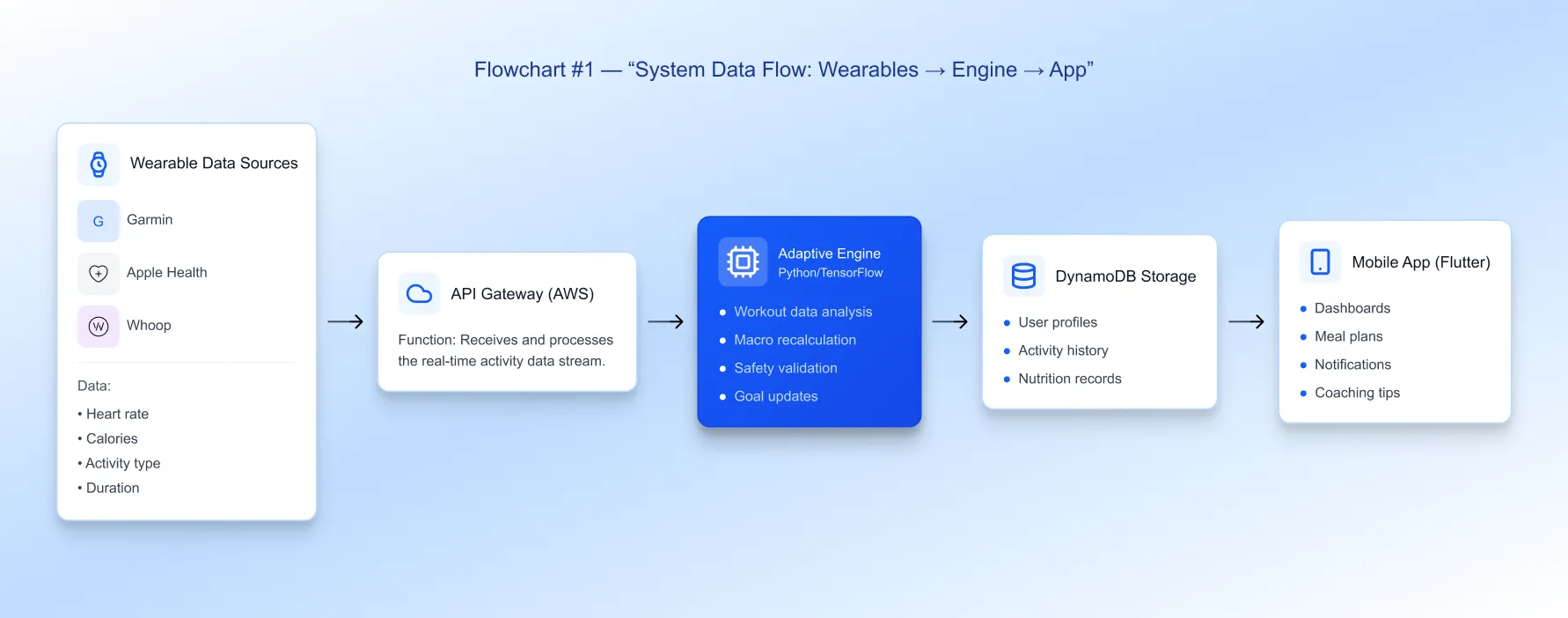
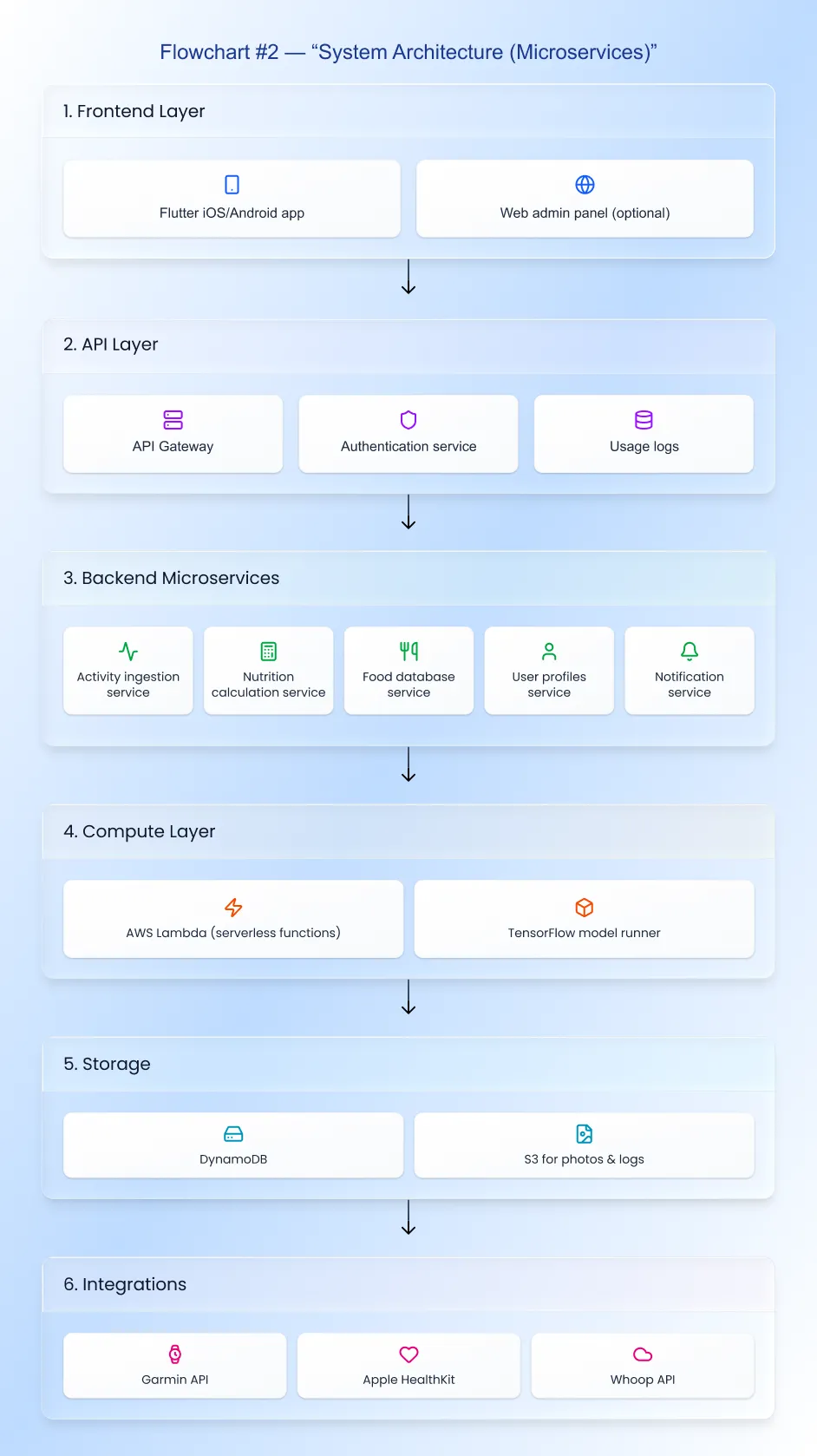
The Paradigma ST team put forward the foundation of the diet and nutrition tracking mobile app development. A full-stack, microservices-based pipeline includes:
- Mobile Frontend: Cross-platform mobile application development with Flutter for a unified iOS and Android experience.
- Backend & Infrastructure: Data ingestion pipeline and API gateway deployment on AWS (Amazon Web Services), serverless architecture (AWS Lambda) for cost-optimized, scalable processing, and DynamoDB for high-speed, flexible database.
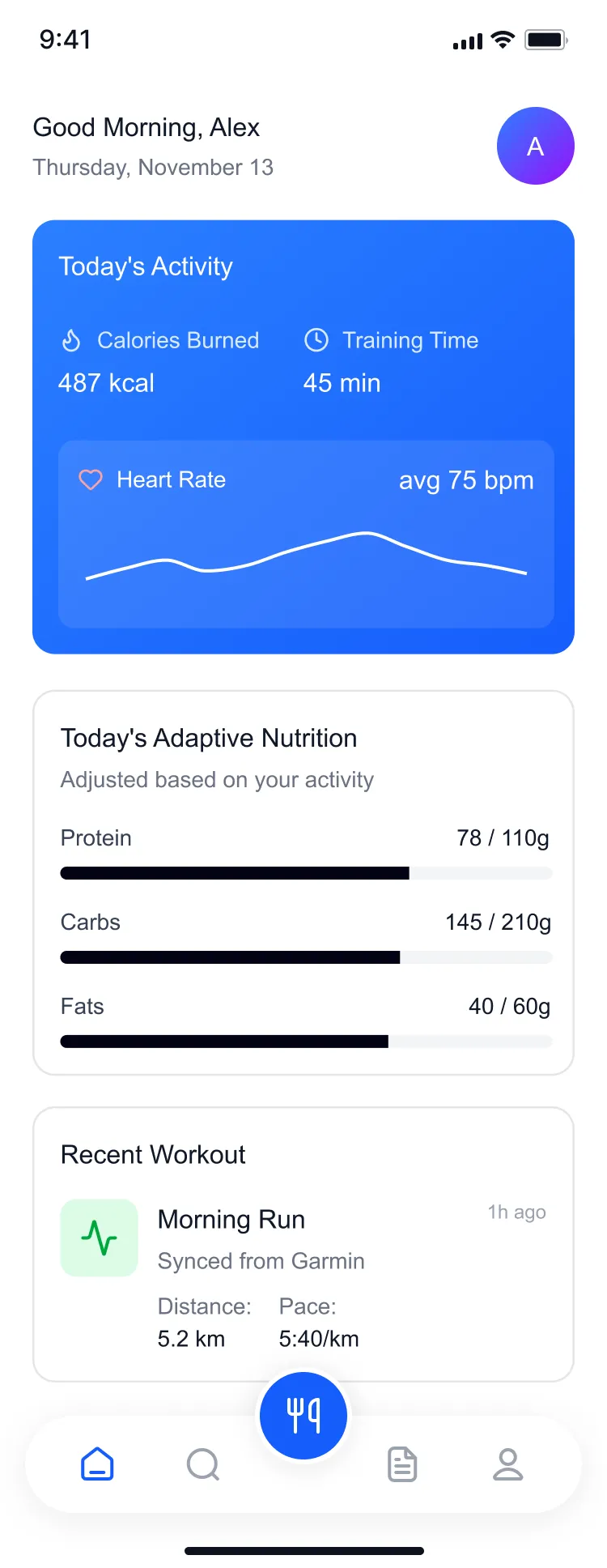
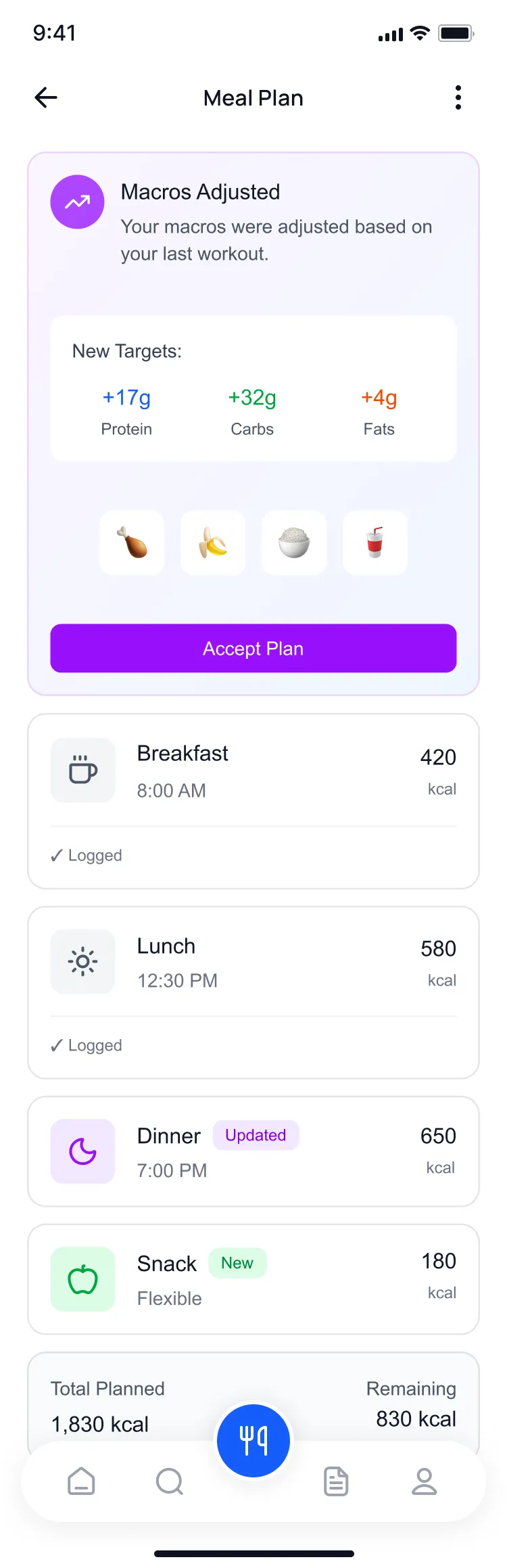
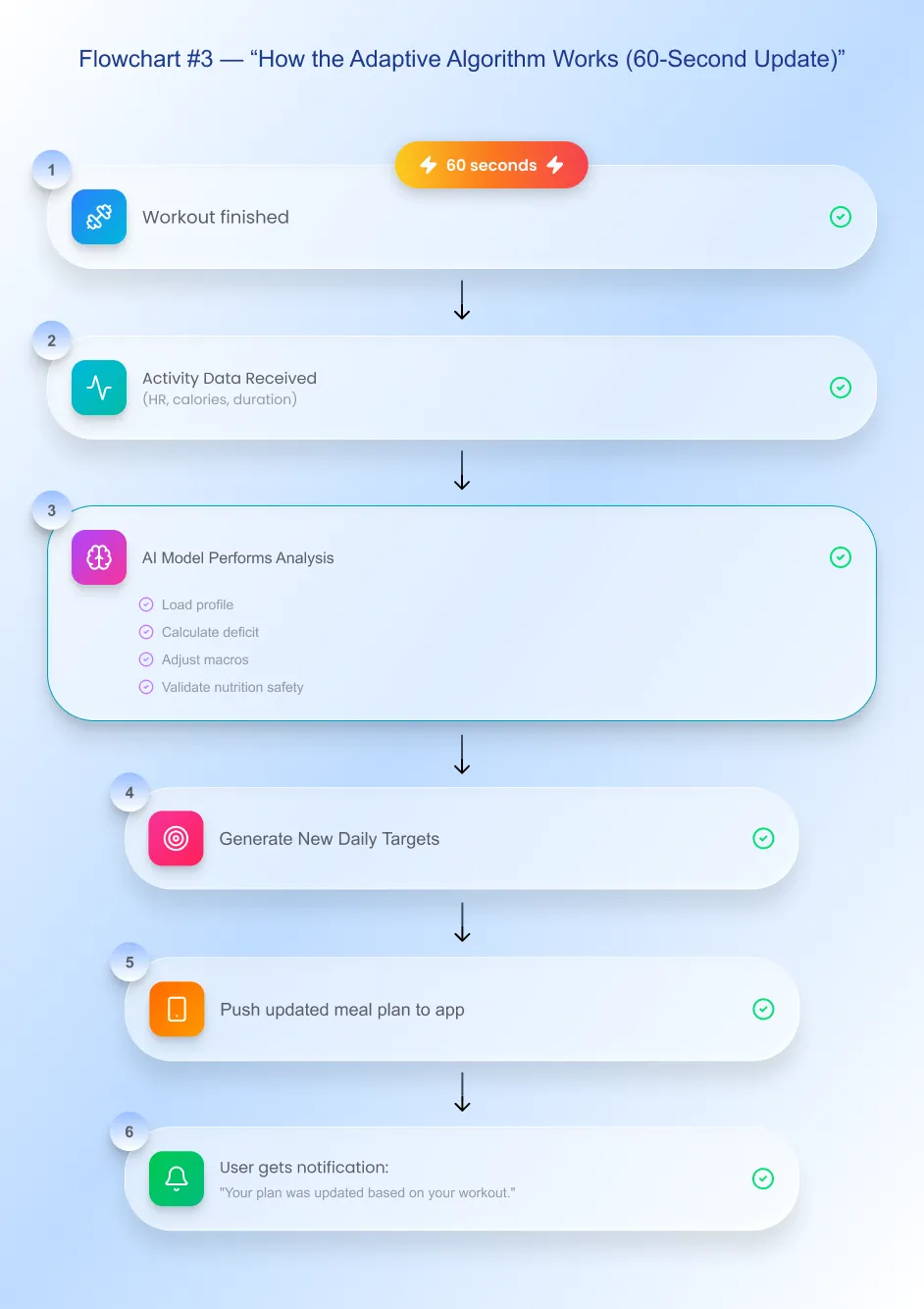
- Adaptive Intelligence Engine: Proprietary algorithm deployment (Python/TensorFlow) for dynamic adjustments based on user activity data analysis (calories burned, heart rate, recovery) and nutritional micro-adjustments.
Process
The troubleshooting and implementation process was completed in less than five months.
- We devoted the first four weeks to the discovery and architecture design process, carefully outlining all potential points of integration with the third-party APIs.
- Then, the major part of the work, which lasted eight weeks, was the backend development and building the adaptive intelligence engine. This was needed to ensure that the data models for nutrition tracking app development were reliable and secure.
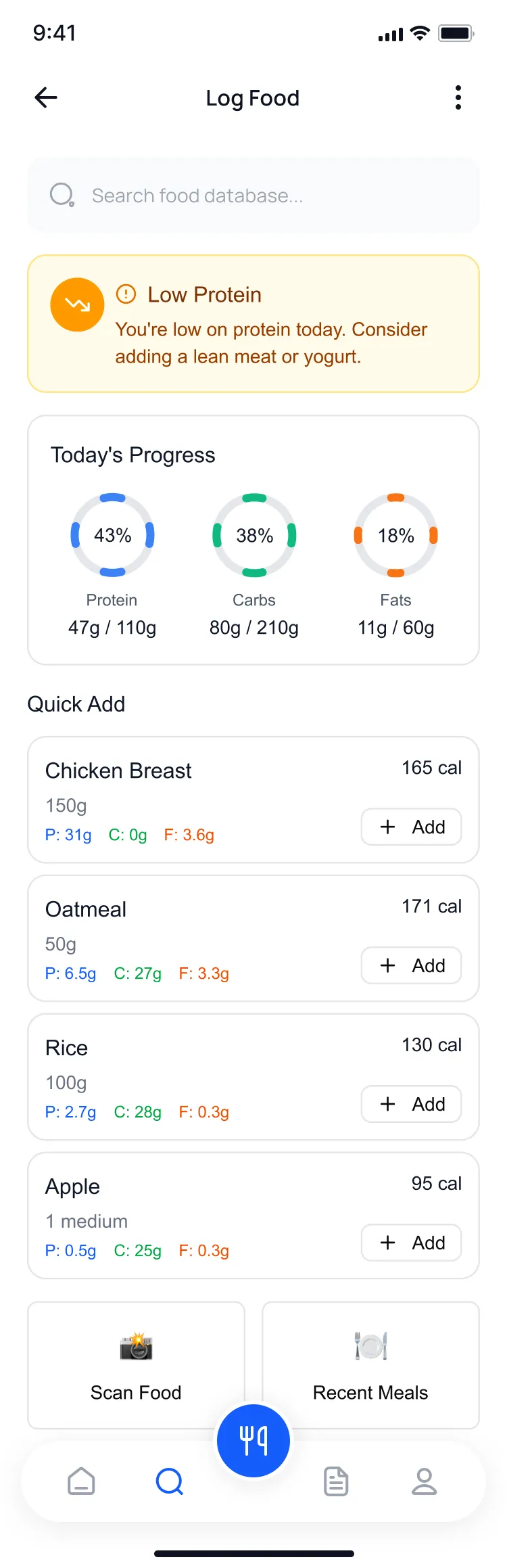
- Afterward, the team spent six weeks on the mobile app frontend, emphasizing UI/UX simplicity and responsiveness.
- The final two weeks were spent on exhaustive end-to-end testing and security audits.
Result
Paradigma ST has successfully provided a synergistic app that logs and analyzes food intake with actionable coaching tips.
|
Inherently scalable infrastructure can accommodate 1M daily active users |
Adaptive algorithm adjusts daily macro goals within 60 secs |
|
Real-time data synchronization with Garmin, Apple Health, Whoop |
|
Challenges
A key challenge in diet app development was to reconcile data, i.e., to integrate the often messy activity data stream with the accurate, usually rigid structure of a comprehensive food database.
Getting the algorithm right was also a complicated task. It had to be effective enough that it would change a diet plan, and at the same time, very safe so that it would not suggest nutritionally unsafe adjustments. A lot of time was spent tuning the logic to the point where the recommendations would be following the sports/nutrition guidelines, even while doing complex calculations.
Interesting Facts
- Our choice was the serverless approach. It was a bit risky, but it yielded a substantial benefit, which was an almost 40% reduction in projected monthly operating costs.
- A glitch in the carbohydrate calculation for sustained workouts led to the system suggesting one fictitious user take in the equivalent of 70 bars of chocolate per day. But it turned out to be a quick fix.
- We applied a human-in-the-loop (HITL) program feature to adjust the AI’s base parameters for B2B enterprise clients by certified nutritionists.
Feedback
The end product is a successful combination of accurate software engineering with specialized sports science knowledge. This diet nutrition app development has made the client more competitive. They can now provide an adaptive experience that not so many health and fitness apps can offer and, consequently, monetize that experience.