Personal Trainer App Development for a Hybrid Coaching
<
| Type of Client | Region | Time Spent | Tech Stack |
| FitTech startup | United States | 8 months | TensorFlow Lite, React Native, Swift, AWS, Docker, Kubernetes, Kafka |
Client Profile
The client’s fitness app had only basic templates. It was just like a glorified PDF reader and a video recording tool. They wanted to elevate the training standard accessible to everyone, including busy businesspeople who cannot afford to go to the gym every day. They needed a remote coaching platform that could provide form/weight advice and motivate users in the same way as a human coach does.
Problem / Task
The client requested tracking user workouts with highly accurate coaching. The idea was to create a platform that would function like a personal trainer, spotting faults in body posture and encouraging users who were getting tired.
We had to implement computer vision to track the user movements using a mobile phone camera. The backend infrastructure was already having issues due to the high volume of video, so the use of heavy data wasn’t an option. Plus, their app monetization strategy didn’t live up to expectations because the “premium” level wasn’t premium enough.
Solution
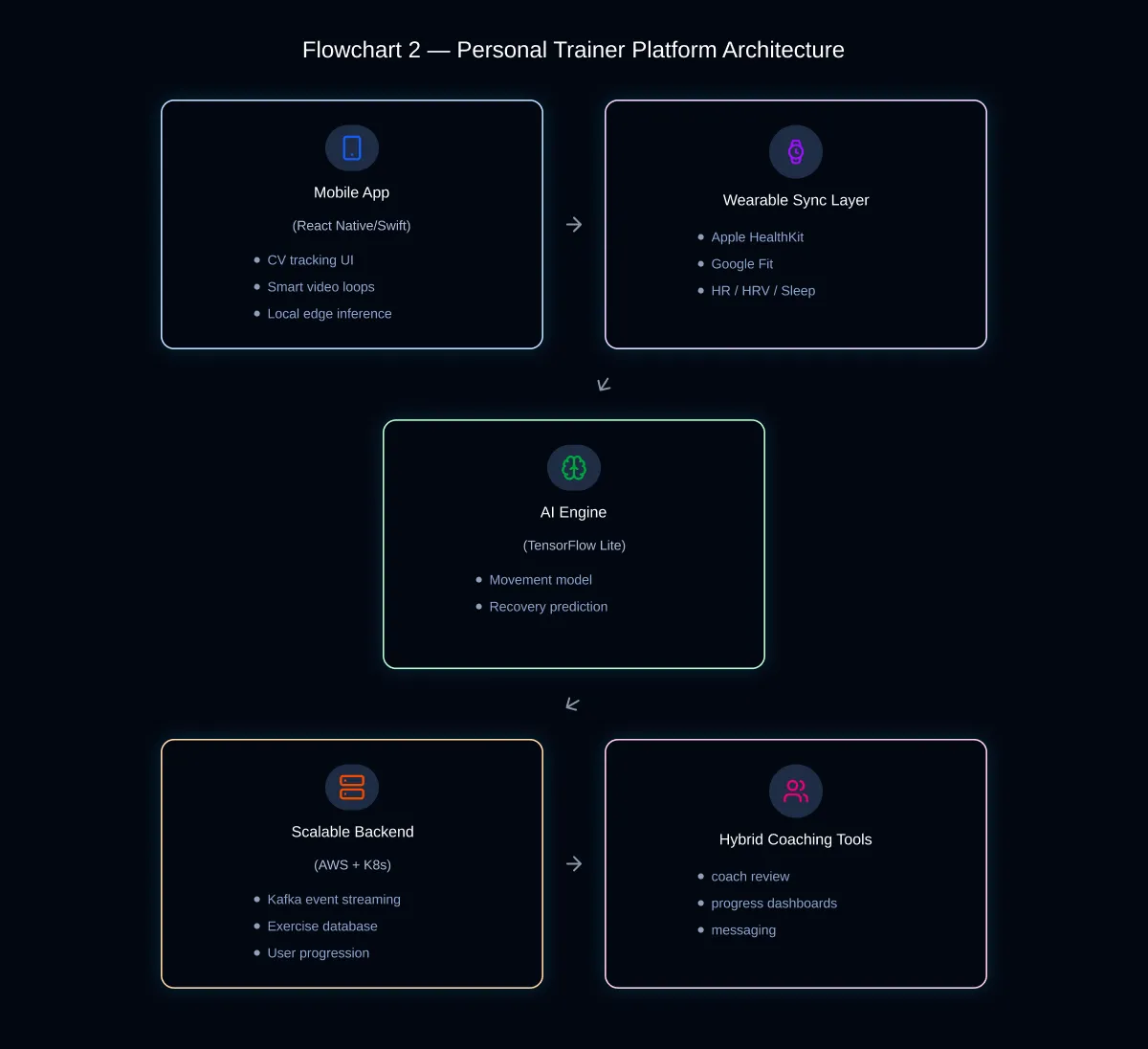
We proposed personal trainer mobile app development that avoids static logic trees and instead creates a dynamic AI engine. The main goal was to simulate a “live” training experience without a human coach. To do this, our team needed:
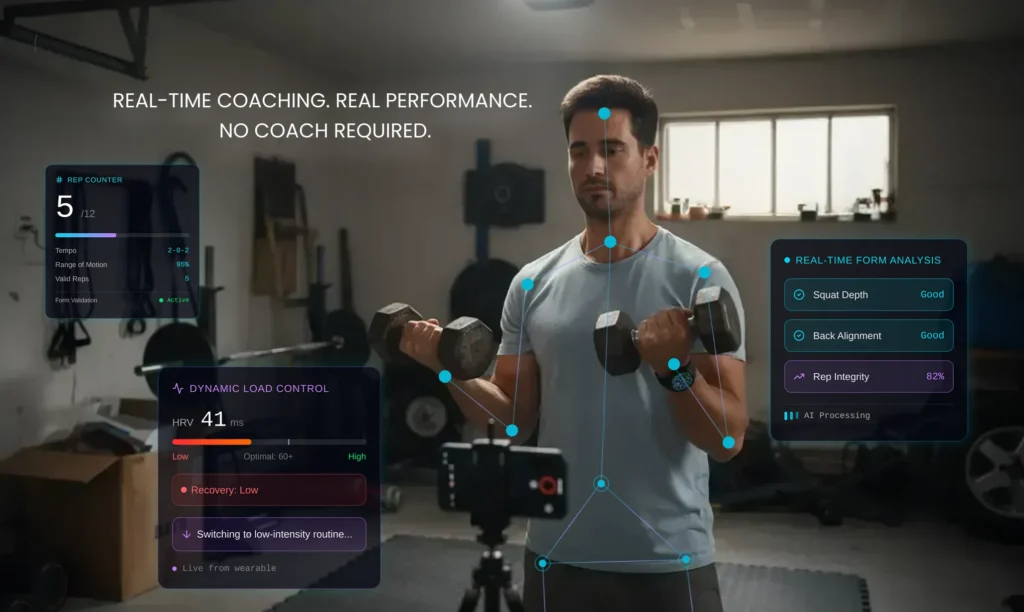
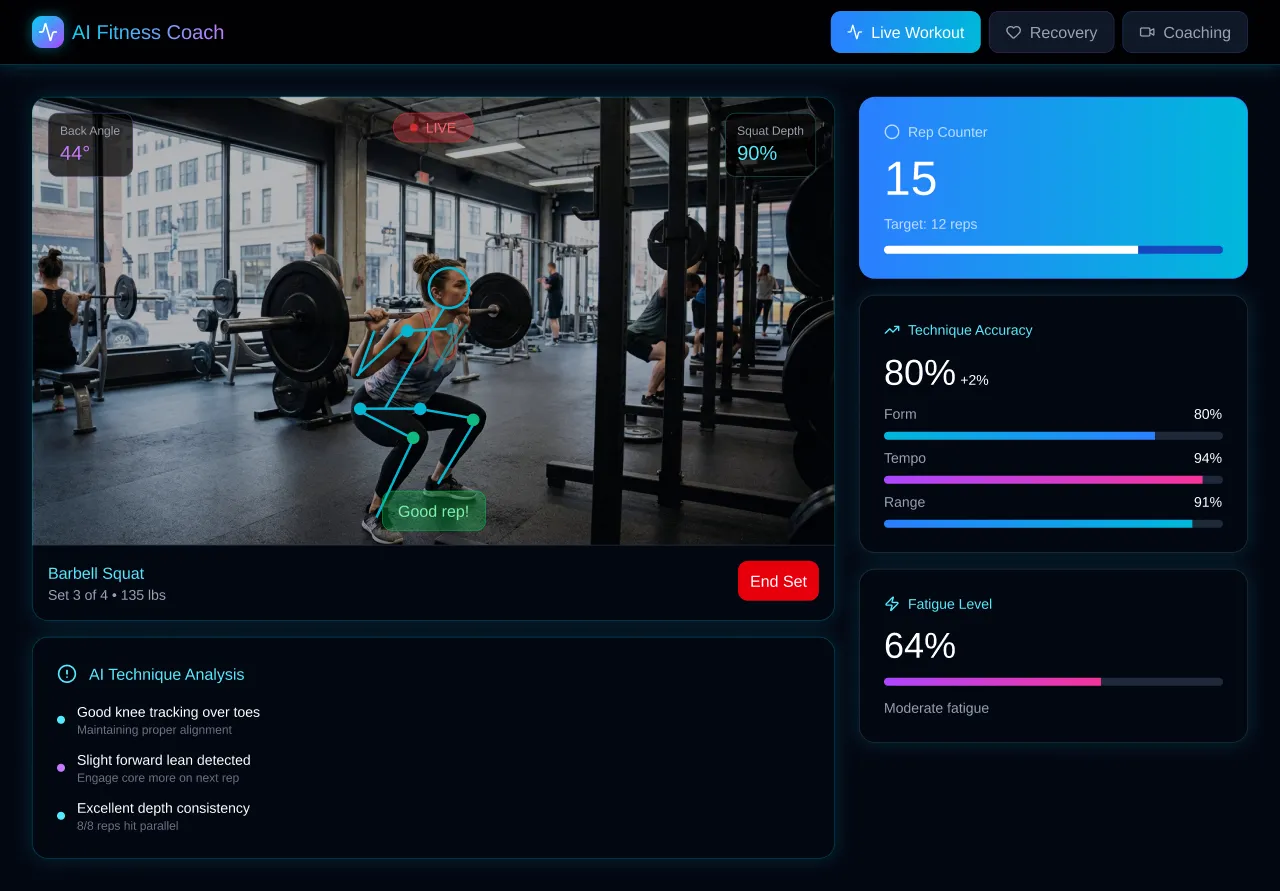
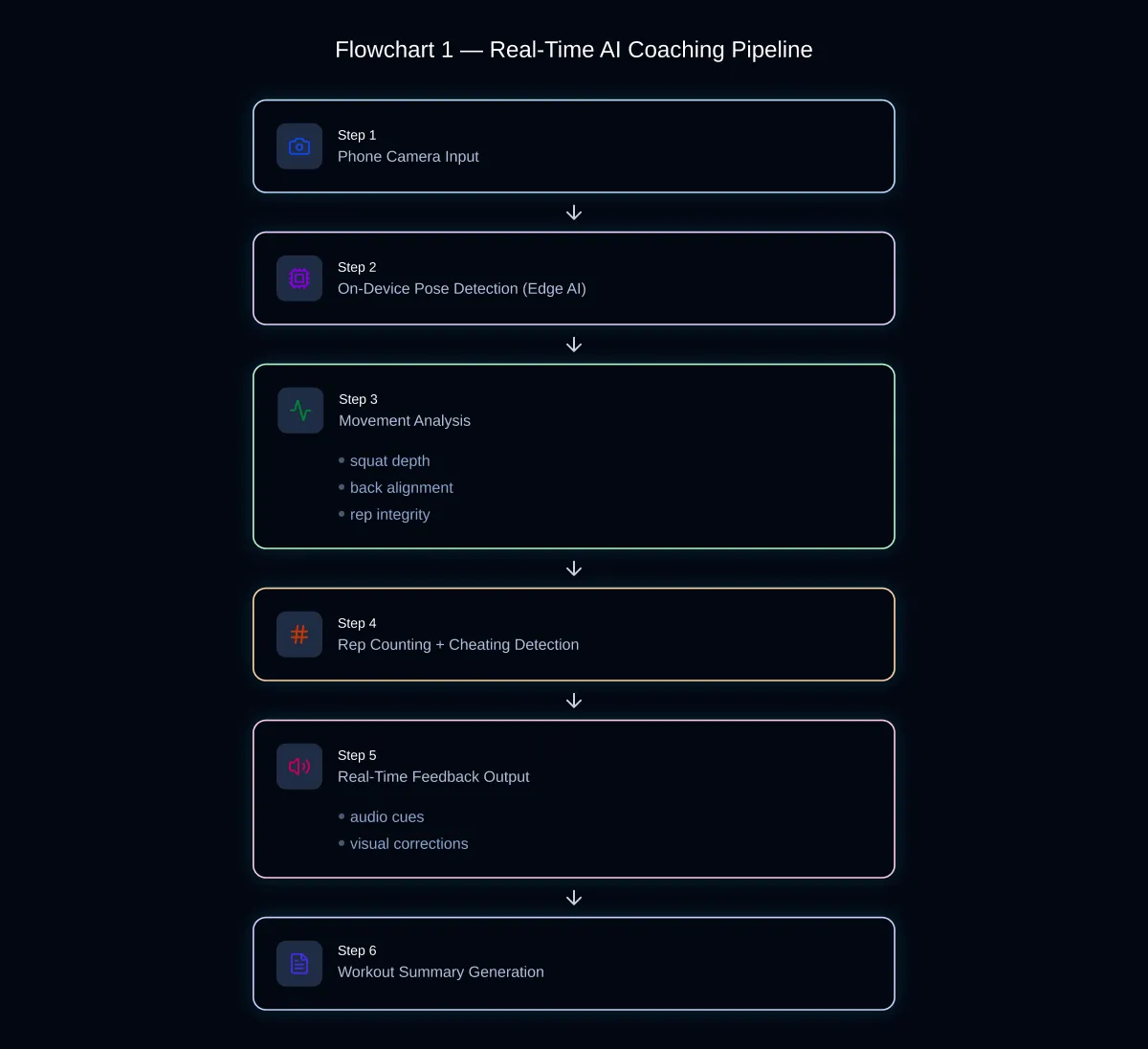
- Computer vision integration: We decided upon a user-specific CV model, which will use a phone camera for the detection of the key body points. It will provide real-time feedback on the correctness of workouts (squat depth, spinal alignment, etc.).
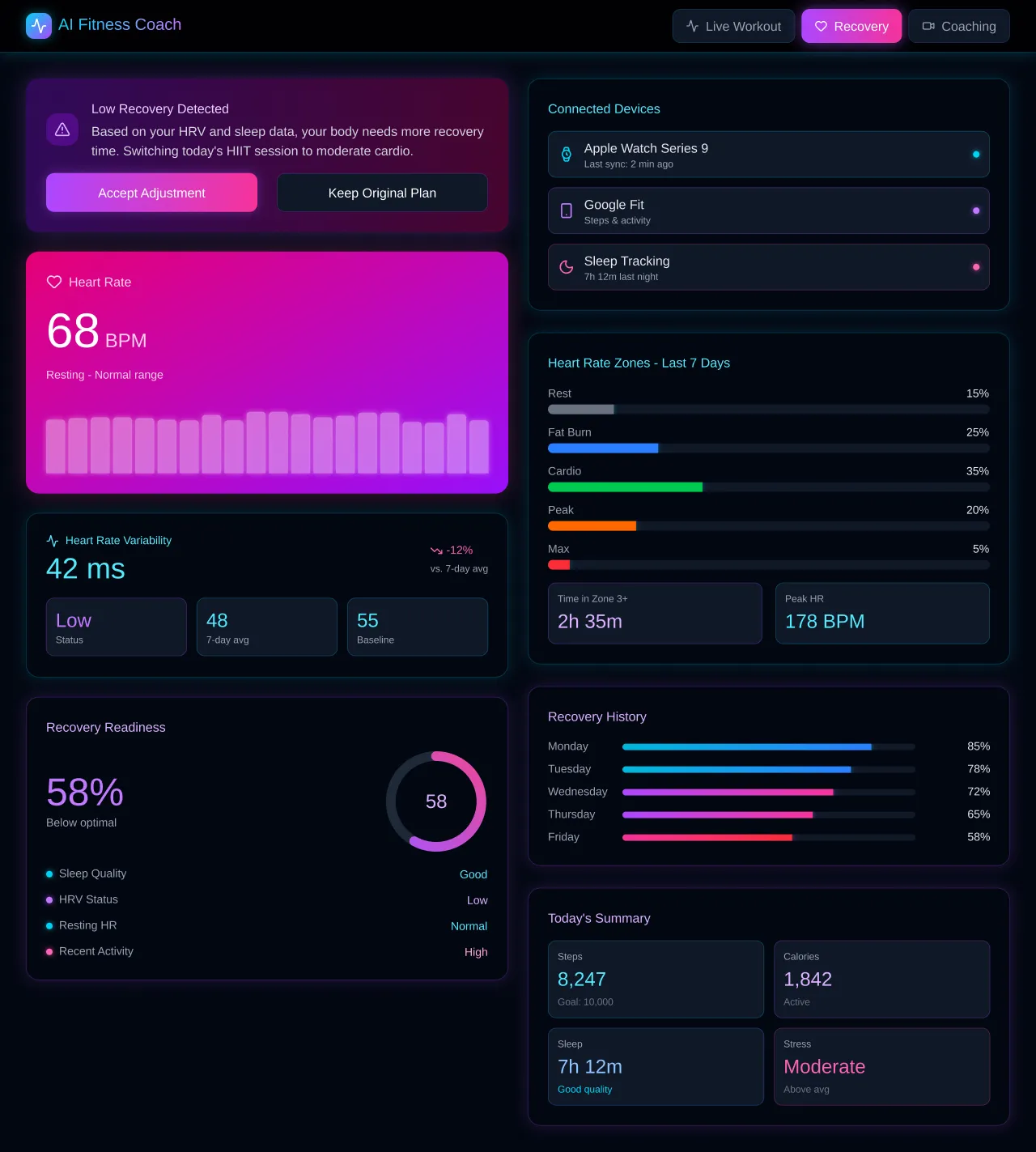
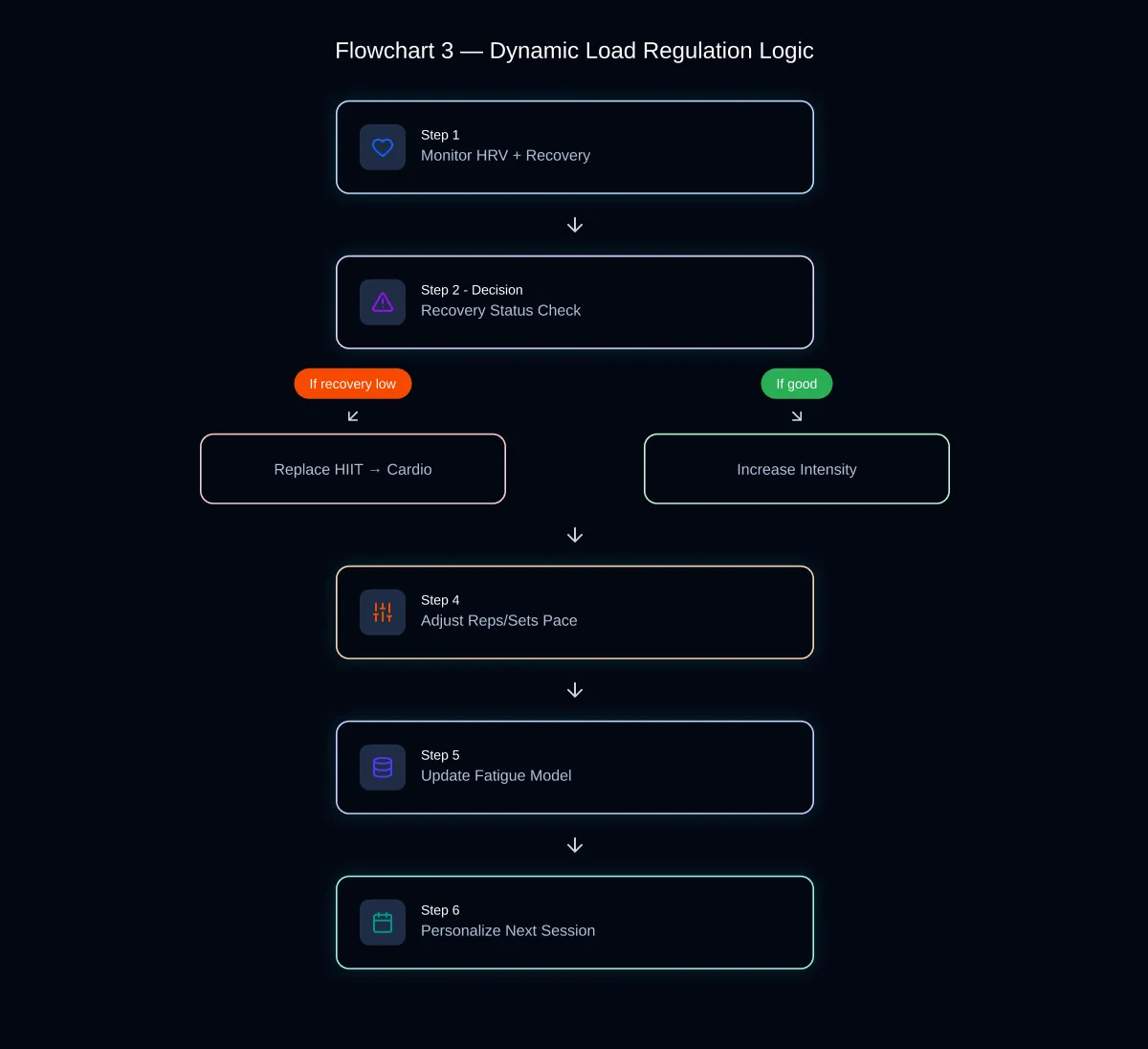
- Dynamic load regulation: The application must be able to get data from the integrated wearable devices (Apple Watch/Garmin) to check the heart rate variability (HRV). In the event of low recovery, the AI will replace HIIT workouts with low-intensity cardio routines.
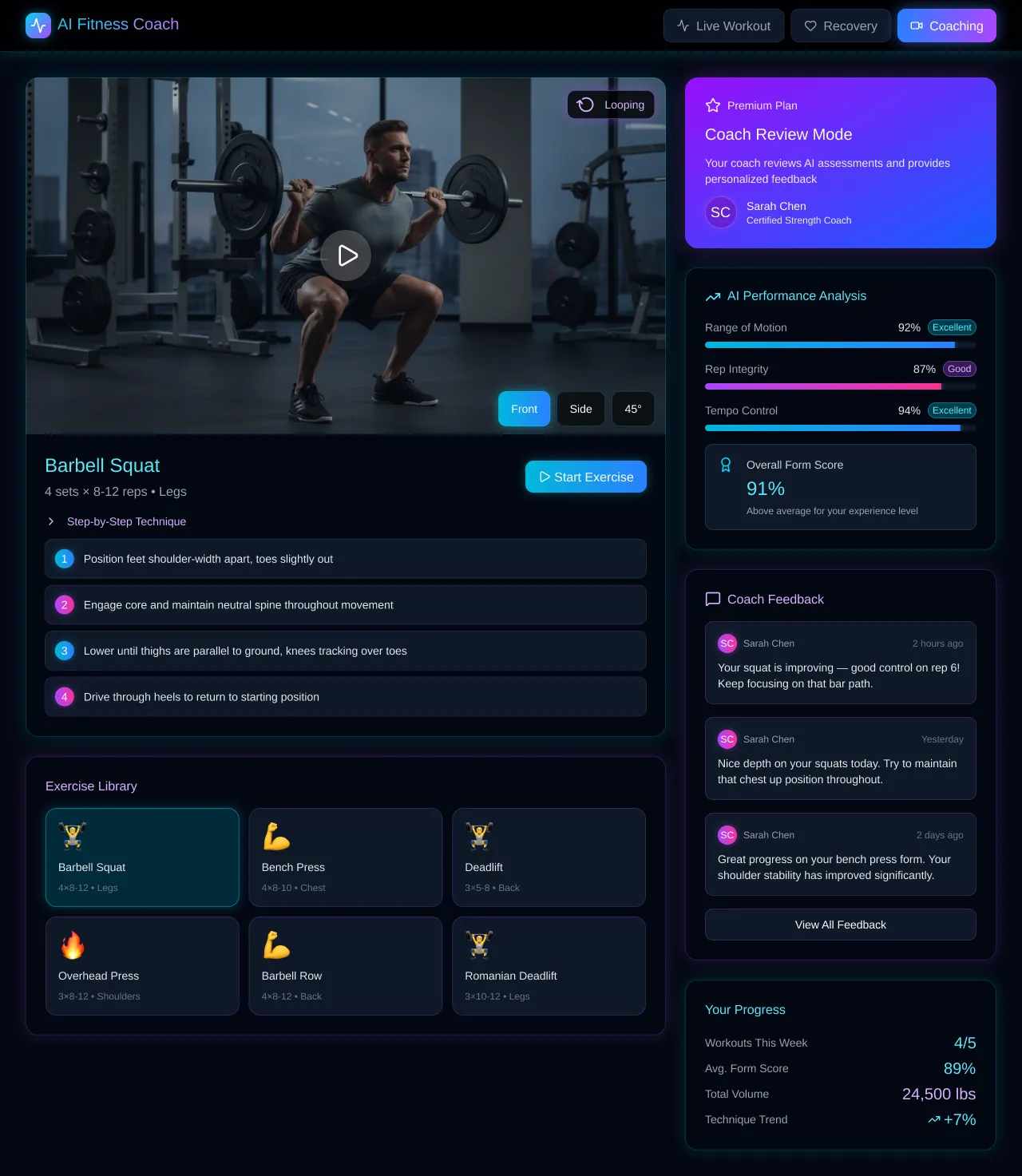
- Smart video library: Redesigning the video exercise library in a more user-friendly format was one of the main concepts through which the smart video library was to be developed. Instead of a single long video, we decided to split the exercise demonstration into loops so the user could set their own pace.
- Hybrid client management: For high-tier users, we wanted to create management tools that would allow coaches to review AI assessments. This adds a human element without the need for manual rep counting.
Process
The process of developing the application went through the stages of audit, CV prototype, infrastructure redesign, integration, and testing.
- That MVP’s database was absolutely useless for real-time telemetry. The team basically had to scrap it. They developed a new architecture.
- Low-light movement detection was the most challenging task. The sensors kept missing the user, so we had to retrain the models using thousands of strength training videos to make sure they were precise.
- Then we migrated their data to a low-latency cloud environment. This was necessary for in-app messaging and real-time feedback. We have integrated the HealthKit and Google Fit APIs to provide the algorithm with sleep and step data, thus creating a complete body composition and health profile for each user.
- After that, we conducted beta testing with certified personal trainers to check whether the AI-powered form corrections were safe and accurate.
Result
Thanks to the completed personal trainer app development, the product has ceased to be a passive logbook and has become an active participant in the user’s workouts. Users felt “watched” in a good way and have started taking their training more seriously.
| 40% | 3x | 25% |
| Increase in user retention | LTV (Lifetime Value) growth | Reduction in support tickets |
Challenges
Data privacy was a major obstacle. Processing video of people in their private residences required very robust security measures (GDPR/CCPA). All CV processing was to be done on the device (edge AI) instead of streaming video feeds to the cloud, which made the application heavier but reduced server costs.
Optimizing AI models to run on older phones without draining the battery quickly was a strange contradiction – we needed high performance with low power consumption.
Interesting Facts
- One of the app’s features is to monitor whether users are cutting reps short (cheating detection). The repetition count is paused until a full motion is done.
- We added a gamification element to boxing, where users punch virtual targets on a screen (shadow boxing).
Feedback
The personal trainer application development lies in mastering biomechanics and latency so that the system responds quickly enough to be useful. We’ve created a solution that truly works in the unpredictable “garage” gym conditions. A pragmatic approach to the fitness app features has increased user retention and reduced the number of support requests.