
ParadigmaST at TechEx Europe 2026: Physical AI, Robotics and Edge AI for Sports Tech
- Physical AI in Sports: From Perception to Real-World Action
- Robotics in Sports: Open-Source Technology Is Lowering the Barrier
- Edge AI for Sports Tech: Intelligence Directly on the Device
- AI Agents for Sports Training: An Experiment Around the Amsterdam Marathon
- From an AI Prototype to a Scalable Sports Tech Product
- What Physical AI, Robotics and Edge AI Mean for Sports Tech
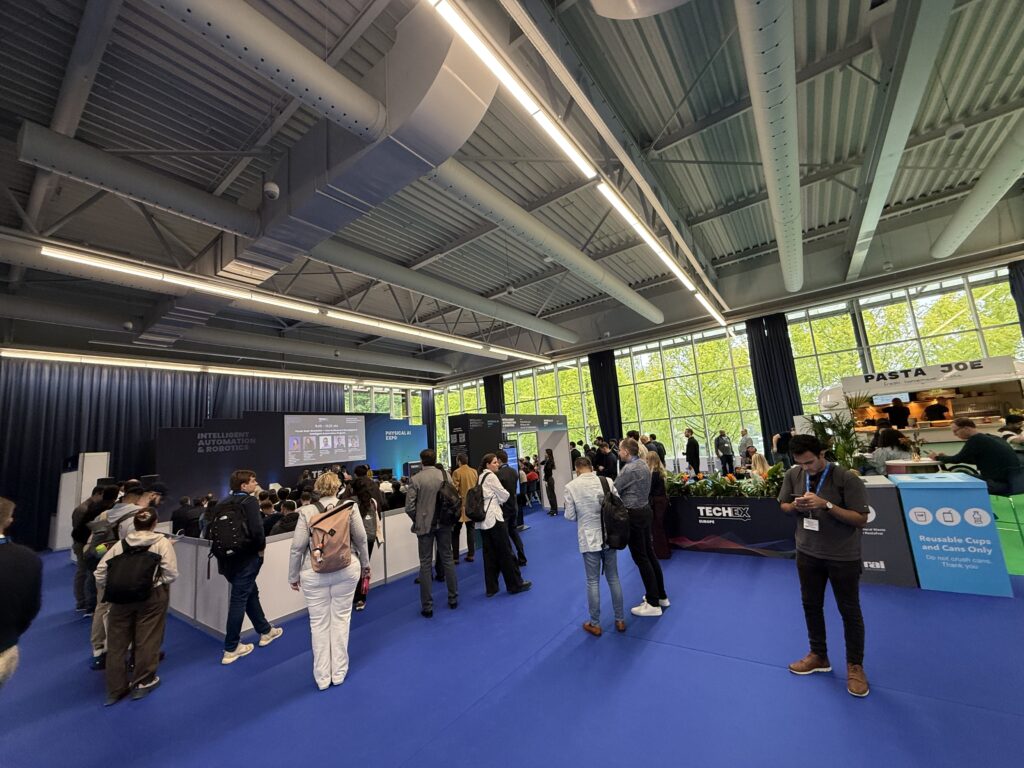
ParadigmaST attended TechEx Europe 2026 in Amsterdam, held at RAI Amsterdam on October 19-20.
For us, the most relevant discussions were around Physical AI, robotics, Computer Vision, Edge AI, sensing technologies and intelligent agents – technologies that are increasingly shaping the next generation of Sports Tech, Fitness Tech and Health Tech products.
What stood out was not one individual technology, but the way these layers are beginning to converge. AI models are moving closer to cameras, sensors, mobile devices and physical systems, while software is becoming more capable of understanding real-world movement and responding to it with lower latency.
For ParadigmaST, this is directly connected to the products we already build and the technology directions we are exploring.

Physical AI in Sports: From Perception to Real-World Action
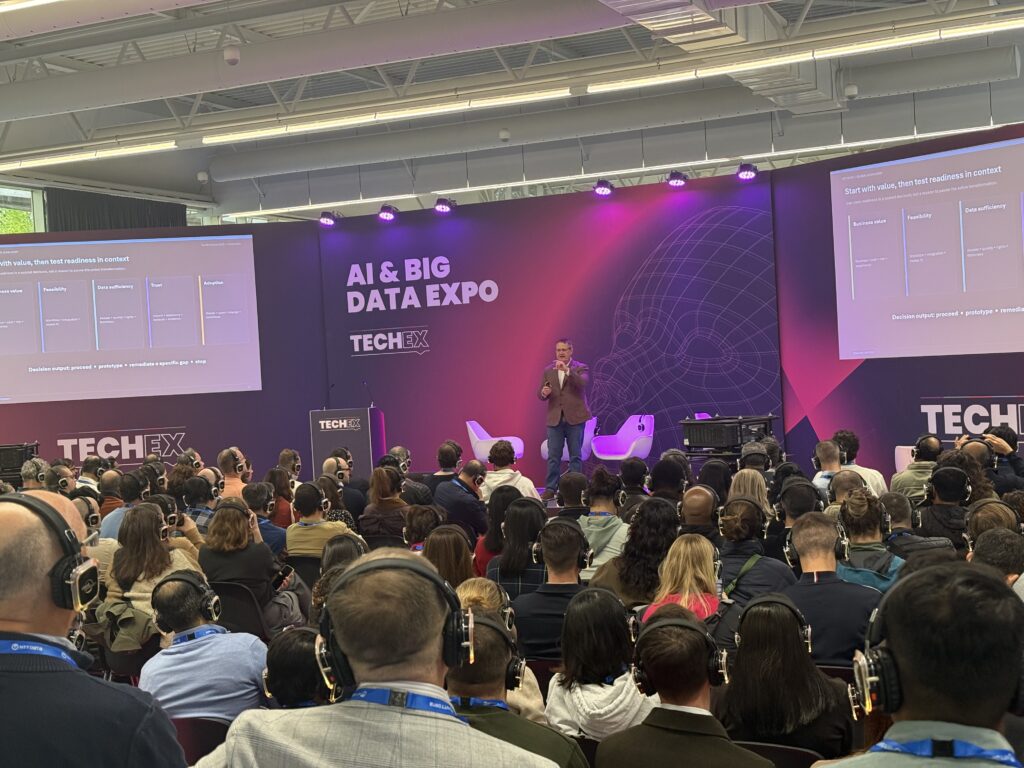
One of the strongest themes at TechEx was Physical AI – AI systems that do more than process information and can interact with the physical world through cameras, sensors, robotics and connected devices.
Jan Andreas Daske from Swisslog explored this transition from digital intelligence to physical execution, including the orchestration of AI, robotics, enterprise systems and human decision-making.
For Physical AI in sports, the same architecture has obvious potential.
A system can use Computer Vision to understand athlete movement, combine video with sensor data, process information locally through Edge AI, and ultimately provide feedback or trigger actions in a connected physical environment.
This moves sports technology beyond passive dashboards and post-session analytics toward systems capable of continuously perceiving what is happening around the athlete.
For ParadigmaST, the interesting area is the intersection of Computer Vision, movement analysis, sensing and intelligent physical systems rather than robotics as an isolated technology.
Robotics in Sports: Open-Source Technology Is Lowering the Barrier
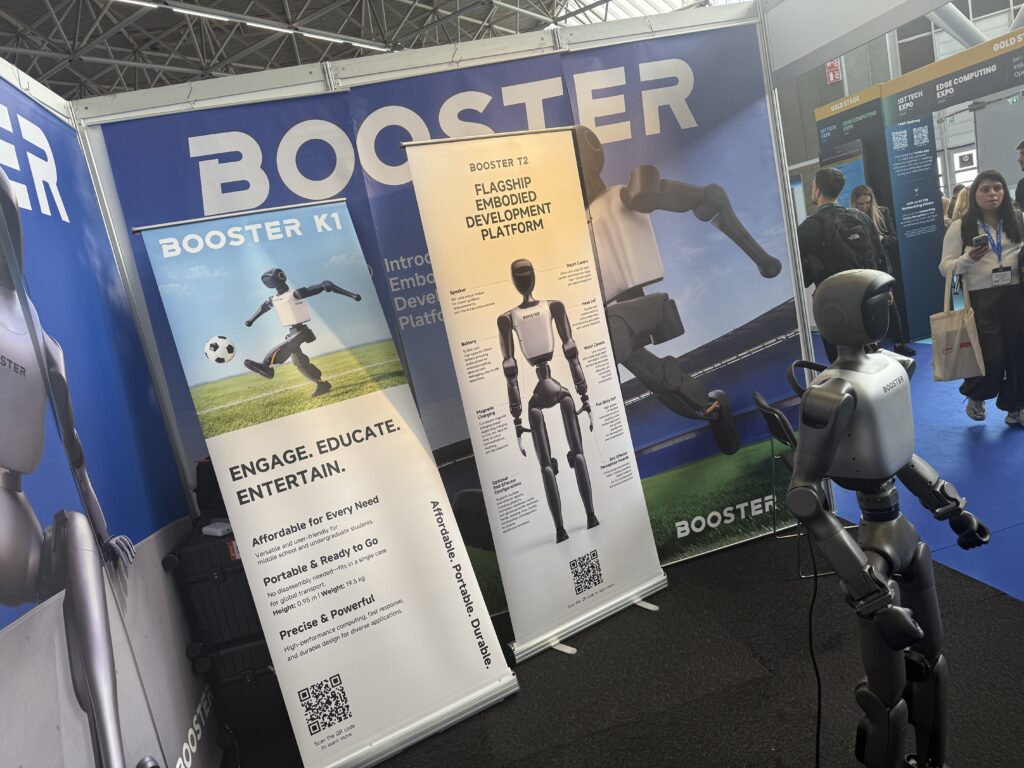
Robotics was another major theme, particularly the growing role of open-source hardware, models and datasets.
Pepijn Kooijmans, LeRobot Lead at Hugging Face, is working on making robotics development more accessible through the open-source LeRobot ecosystem and SO-101 robotic platform. The approach allows developers to work with reusable datasets, models and tools rather than building every component from scratch.
This matters for robotics in sports and fitness because experimentation has traditionally required significant investment across hardware, machine learning, control systems and embedded engineering.
As the underlying technology becomes more reusable, it becomes easier to validate applications involving sports equipment, training devices, rehabilitation systems and other intelligent physical products.
Iulia Feroli’s practical engineering perspective on Physical AI reinforced the same point: moving from an AI experiment to a working robotic or embedded system requires much more than a model. Hardware, sensing, control, deployment and software architecture all need to work together.
For Sports Tech companies, this creates opportunities to experiment with robotics without necessarily becoming robotics companies themselves.
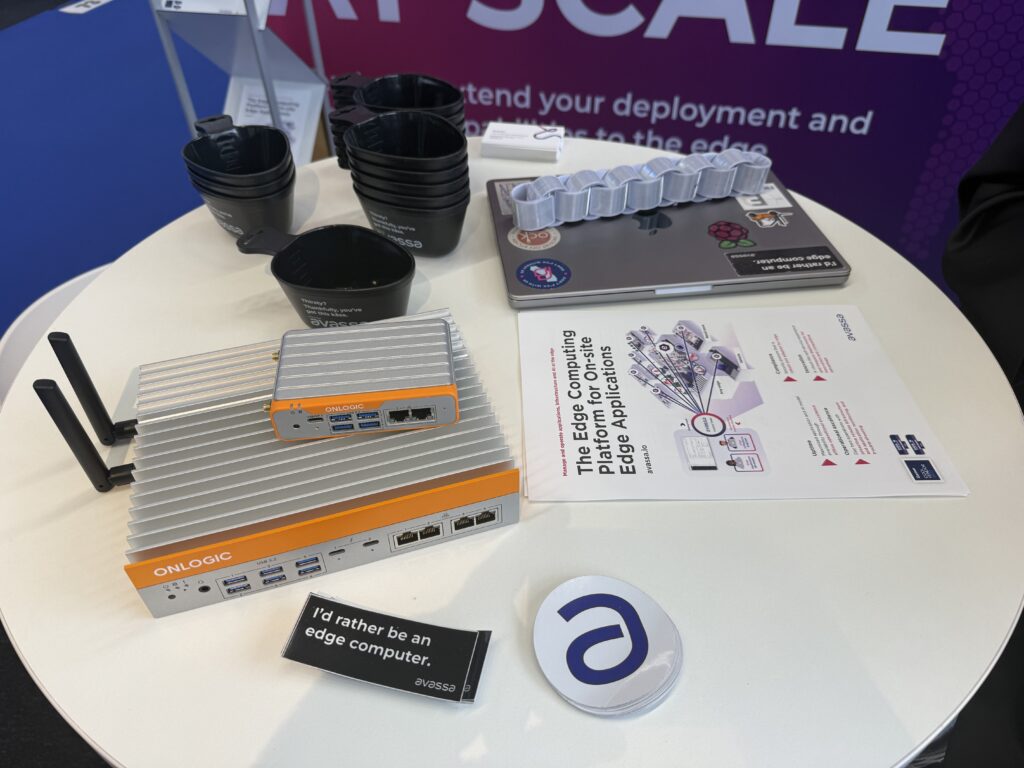

Edge AI for Sports Tech: Intelligence Directly on the Device
Edge AI for Sports Tech was particularly relevant to our own Computer Vision work.
Sports products often deal with large amounts of video and sensor data, while simultaneously requiring fast response times. Sending everything to the cloud is not always technically or economically practical.
Running AI directly on smartphones, cameras and edge devices can reduce latency, lower bandwidth requirements and enable products to continue operating with limited connectivity.
This is increasingly important for applications such as:
- athlete and equipment tracking;
- movement and biomechanics analysis;
- real-time or near-real-time coaching feedback;
- connected training equipment;
- automated sports video processing.
The engineering challenge is not simply deploying an AI model.
Model optimisation, memory usage, hardware acceleration, power consumption, video pipelines and system reliability become part of the AI problem itself.
This is something we already see in ParadigmaST projects where Computer Vision models need to move from server-side R&D to production environments running directly on mobile or edge hardware.
AI Agents for Sports Training: An Experiment Around the Amsterdam Marathon
The timing of TechEx made another Sports Tech topic particularly relevant.
One day before the conference opened, Amsterdam hosted the TCS Amsterdam Marathon, a World Athletics Platinum Label road race. The 2026 event is planned for 32,000 marathon runners and more than 60,000 participants across the full marathon weekend.



Around the same period, ParadigmaST was running internal experiments with modern intelligent agents for amateur marathon preparation.
The idea was to explore whether AI agents can provide a more adaptive support layer than a traditional static training plan – maintaining context over time, helping interpret training information and adapting guidance as circumstances change.
This is still an emerging field.
Recent sports-science research has started exploring autonomous AI agents for areas such as training-load management, exercise prescription, recovery, nutrition, sleep and injury-prevention workflows, while also emphasising the need for human oversight and proper validation.
For amateur endurance athletes, the opportunity is particularly interesting because preparation takes place over many months and involves continuously changing inputs rather than a single isolated decision.
The long-term opportunity is not simply another chatbot that answers questions about running.
It is an intelligent system capable of maintaining training context and helping athletes and coaches work with changing information over an extended preparation cycle.
Our marathon experiments are exploratory rather than a finished ParadigmaST product, but they represent another direction in which we see AI agents in sports becoming increasingly relevant.
From an AI Prototype to a Scalable Sports Tech Product
The technology itself is only part of the equation.
Mahdi Fanidisfani’s TechEx workshop, “MVP or Mirage? The AI Start-up Stress Test,” focused on a fundamental question for AI founders: whether the problem is real, the solution can scale and somebody is actually willing to pay for it.
That perspective is particularly relevant to our work with early-stage companies through the ParadigmaST Venture Studio.
A technically impressive Computer Vision model, robotics prototype or AI agent is not automatically a viable Sports Tech product.
The challenge is connecting technical feasibility with:
- a clear user problem;
- realistic product architecture;
- a sustainable business model;
- a route to customers;
- technology that can operate reliably outside a laboratory.
This is why we increasingly approach AI projects as complete products rather than isolated models.
What Physical AI, Robotics and Edge AI Mean for Sports Tech
TechEx Europe reinforced a broader trend we are already seeing across our projects.
Physical AI, robotics, Edge AI, Computer Vision, sensors and AI agents are becoming increasingly interconnected.
In Sports Tech, this can mean systems that understand athlete movement from video, combine it with sensor information, process data directly on a device and provide timely feedback.
In Fitness Tech, similar technology can power intelligent coaching, connected equipment and more personalised training experiences.
In Health Tech and rehabilitation, the same underlying technologies can support movement assessment, remote monitoring, connected devices and intelligent assistance.
The individual technologies are interesting, but their convergence is more important.
At ParadigmaST, we see some of the most promising opportunities emerging where software intelligence meets real-world movement, sensing and physical interaction.
TechEx Europe was a valuable opportunity to see how these technologies are developing across industries, compare them with the challenges we work on in Sports Tech, Fitness Tech and Health Tech, and identify new technologies and potential partners for future products.